
Klook Commission Rate: What Tour Operators Actually Pay
If you have been finding pages quoting an 8% Klook commission, that number is not the Klook commission rate you will pay to list. It is what affiliates earn for referring bookings to Klook, a different relationship entirely. What operators actually pay to sell through Klook is commonly reported in the 15 to 25% range, though Klook does not publish a fixed rate anywhere and negotiates it individually with each merchant.
That is the short answer. The real story is that Klook is one of the few major OTAs that gives operators no public number to plan around before onboarding even starts. This article separates the two commission structures that keep getting confused, explains what determines your rate, and covers what to expect when you apply.
Key Takeaways
- Klook’s supplier commission is commonly reported at 15–25%, lower than Viator’s typical 25% and GetYourGuide’s 25–30% range, but this is not confirmed by any official published rate card
- Klook negotiates commission individually per merchant based on destination, product type, and booking volume, with no fixed number disclosed until you apply
- The 8% figure that dominates search results for “Klook commission” belongs to the affiliate/referral program, not the supplier commission operators pay
- There is no upfront listing fee, and Klook only earns when a booking completes
- Getting listed requires a registered business (not an individual) and typically takes 2 to 4 weeks from application to live listing
What Klook actually charges operators
The Klook commission rate range
The Klook commission percentage suppliers report is commonly 15 to 25% of the booking price, based on figures that recur consistently across independent operator guides and OTA comparison sites. That places it below Viator’s typical rate of around 25% and below GetYourGuide’s published 25 to 30% band.
No official source confirms this figure directly. Klook’s own merchant portal does not publish a commission rate, and there is no equivalent of GetYourGuide’s Supply Partner Help Center stating a number in writing. Treat the 15 to 25% range as a well-corroborated estimate from third-party sources, not a confirmed rate, and expect Klook’s business development team to give you your actual number only once you apply.
(Range reported consistently across multiple third-party operator guides as of September 2026. No official Klook source confirms this figure. Confirm your actual rate directly with Klook during onboarding.)
Why there’s no published rate
GetYourGuide publishes a standard starting rate and lets operators negotiate down from it. Klook skips that step entirely and negotiates from scratch with each merchant, weighing destination, activity type, and booking volume before quoting a number.
This is a structural choice, not an oversight. Arival has reported since as early as 2017 that Klook’s commission “depends on the type of experience and service” and directs interested suppliers to contact the company directly rather than consult a published fee schedule, a Klook merchant commission approach that has not changed. A published rate card gives operators a baseline to argue from before a conversation even starts. Without one, Klook’s business development team sets the terms of the first offer, and the operator has nothing public to compare it against. That shifts the balance of power toward the platform from the first email.
What this means in practice: walk into onboarding having done your own research rather than expecting Klook to volunteer a number early. Ask directly what commission applies to your specific product and destination before you agree to anything, and treat the first figure offered as a starting position rather than a fixed term.
Klook commission vs the affiliate program (clear this up first)
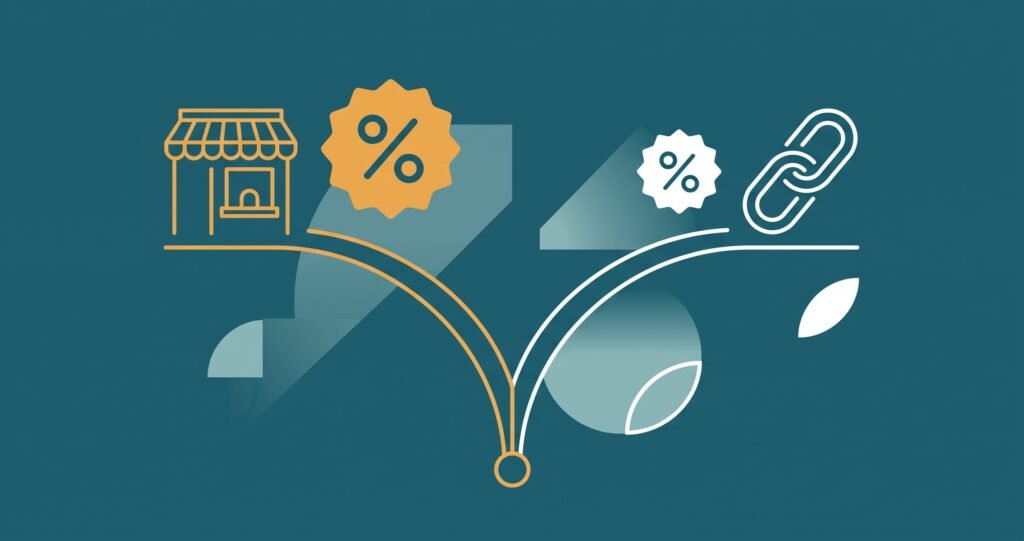
Searching “Klook commission rate” surfaces a wall of affiliate marketing content quoting rates like 8%, and it is worth being direct about why. Klook runs two entirely separate commission structures, and most of what ranks for this keyword is about the wrong one.
Supplier commission is what a tour operator pays Klook for selling their experience through the platform. This is the 15 to 25% figure covered above.
Affiliate commission is what a blogger, content site, or referral partner earns for driving a booking to Klook through a tracked link. That commission runs roughly 2 to 8%, occasionally higher in specific categories, and it is paid by Klook to the referrer, not by the operator to Klook.
A former colleague of mine ran a walking food tour business out of Lisbon and spent the better part of an afternoon trying to figure out what she’d actually be paying Klook before she’d even submitted an application. She’d found a blog post quoting an 8% commission and built her pricing model around it, only to get on a call with Klook’s business development team weeks later and hear a number closer to 20%. Her first reaction was that she’d been misquoted or that the rate had changed. It hadn’t. She’d simply been reading about the affiliate program the entire time, a completely different commission structure aimed at referral partners, not suppliers. She had to go back and rework her margin calculations from scratch, and it delayed her launch on the platform by nearly three weeks while she renegotiated her pricing with the numbers that actually applied to her.
If you are a tour operator evaluating whether to list on Klook, the affiliate program percentages are not relevant to your cost structure at all. Ignore any page discussing Klook’s “commission” that talks about earning money from referrals rather than paying it out on bookings.
How Klook commission compares to Viator and GetYourGuide
| Klook | Viator | GetYourGuide | |
|---|---|---|---|
| Reported commission | 15–25% (unpublished, negotiated) | 20–30%, typically ~25% | 25–30%, 30% default |
| Rate disclosure | Not published | Broadly stated, limited negotiation | Published range, negotiable above ~1,000 bookings/year |
| Listing fee | None | Approximately $29 per product | None |
| Regional strength | Strongest in Asia-Pacific, reportedly around 80% of bookings tied to APAC travel | Global, Western-market weighted | Global, Western-market weighted |
| Payout | Monthly, precise settlement window not publicly confirmed | 21 business days after the travel month ends | 5th business day of the following month, bi-weekly option at +2% commission |
Klook vs Viator commission
Klook’s reported 15 to 25% sits below Viator’s standard commission of around 25%, and Klook charges no per-product listing fee against Viator’s roughly $29. The trade-off is reach: Viator’s supply and demand skew global and Western-market weighted, while Klook’s strength is concentrated in Asia-Pacific travel.
Klook vs GetYourGuide commission
The Klook vs GetYourGuide commission comparison follows the same pattern. GetYourGuide’s published 25 to 30% range, with 30% as the default for new suppliers, sits above Klook’s reported band, and both platforms charge no upfront listing fee. GetYourGuide publishes its starting rate; Klook does not.
The lower reported range is genuinely attractive on paper, but it is not the whole comparison. Klook’s booking volume is concentrated in Asia-Pacific travel. An operator running tours in Seoul, Tokyo, or Bali is negotiating from a position where Klook needs their supply. An operator running tours in a market Klook barely serves has far less to bring to that conversation, regardless of what the headline range suggests.
What determines your rate
The factors that come up consistently across operator accounts of Klook onboarding:
- Destination. Markets where Klook has strong existing demand and limited local supply tend to see more favourable terms than oversaturated categories.
- Activity type. Certain product categories, food tours, transport, ticketed attractions, are reported to carry different bands than multi-day tours or niche experiences.
- Booking volume. As with every OTA, an operator who can demonstrate existing booking history elsewhere has more room to negotiate than a brand-new listing with no track record.
Consider a Seoul-based street food tour operator with an established Airbnb Experiences listing generating 40 bookings a month and a 4.8-star review average across 200+ reviews. Walking into Klook onboarding with that history, a specific volume projection, and knowledge of where Seoul food tours typically land gives that operator something concrete to negotiate from. An operator with no booking history and no comparable data has nothing but the number Klook offers first.
Bring your existing booking volume, your review history, and whatever market-specific rate information you can find before the conversation starts. None of this is published, so the research burden sits with you.
How to become a Klook supplier: what to expect
Klook only partners with registered businesses, not individuals. You need to register as a company or with written authorisation from one, and you will be asked for a certificate of business registration along with any relevant licences or certifications for your activity.
The process runs in roughly this order:
- Apply through Klook’s Merchant Portal with your business details
- Complete a business questionnaire covering your company and product offering
- Klook’s business development team reviews the application
- Commission is discussed and agreed during this review, not before
- Listings are built and go live
The full process typically takes 2 to 4 weeks from application to a live listing. There is no upfront listing fee. Klook earns nothing until a booking completes, and handles payment processing and fraud or chargeback exposure on its own side rather than passing those costs to operators directly.
Payout timing
Some third-party sources describe Klook’s payouts as monthly, but unlike Viator’s stated 21 business days or GetYourGuide’s 5th-business-day default, there is no publicly confirmed settlement window. Confirm the exact cadence directly during onboarding rather than assuming it matches either competitor.
OTA Payment Terms and Cash Flow
What to do this week
Three concrete steps if you are evaluating Klook or already listed:
- Check where your bookings actually come from geographically. If a meaningful share of your current traffic is European or North American rather than Asia-Pacific, Klook’s regional strength may not translate into the volume the commission range implies.
- Gather your negotiating material before you apply. Booking history, review scores, and average order value from other platforms all give you something to reference when Klook’s business development team quotes a rate.
- Ask directly for the rate in writing before agreeing to anything. With no published rate card, a verbal figure on an onboarding call is not something you can hold the platform to later.
OTA Commission Models for Tour Operators
Klook’s willingness to negotiate a lower headline commission than Viator or GetYourGuide is a real advantage for the right operator. It is not a reason to skip the preparation that a published rate card would otherwise do for you.
Klook does not publish an official commission rate. Figures in this article reflect third-party reporting as of September 2026 and should be confirmed directly with Klook during onboarding before making commercial decisions.