
Tiqets Commission Rate: What Attractions Actually Pay (2026)
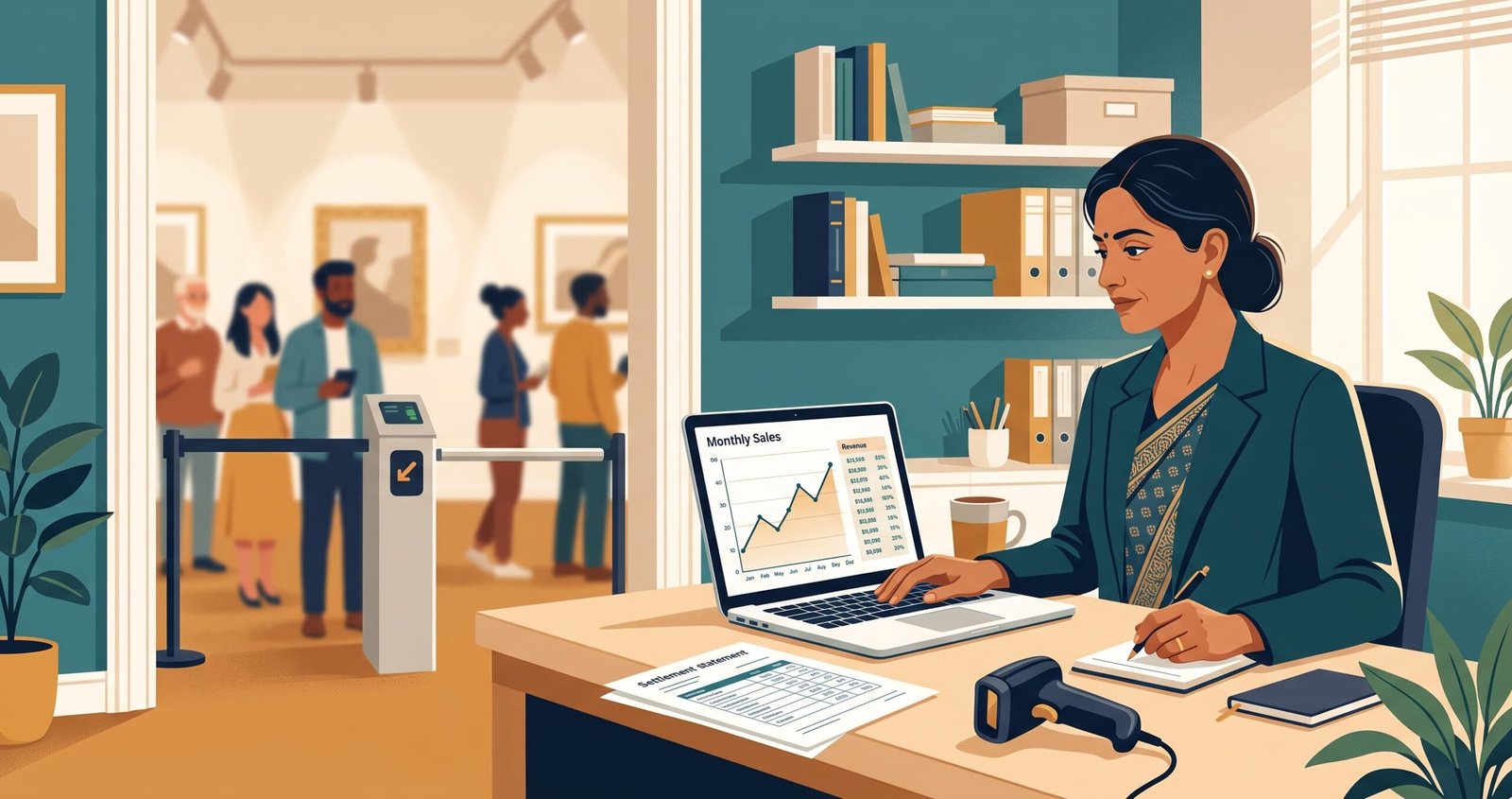
The Tiqets commission rate is not published. Tiqets negotiates its fee with each attraction, calculates it on the ticket’s sale price, and third-party guides report it at 20 to 30%. There are no sign-up or monthly fees, and Tiqets pays out within 21 business days after the end of the month in which tickets were sold.
If you’ve searched this already, you’ve probably seen 6% or 7% quoted. That isn’t your cost. It’s what Tiqets pays bloggers and affiliates who send it traffic, and those affiliate pages fill most of the search results for anyone trying to work out what listing actually costs.
Most operators assume the percentage is the whole story. It isn’t. Tiqets publishes its supplier terms, and almost nobody reads them. They answer questions the headline rate doesn’t: when the fee becomes due, when your money arrives, who controls your price, and how easily you can leave. This article goes through each one, compares Tiqets with Viator, GetYourGuide and Civitatis, and covers what Expedia’s ownership means for suppliers.
Key Takeaways
- The Tiqets commission rate is negotiated per attraction and never published; it’s commonly reported at 20 to 30% of the sale price (as of October 2026)
- Under Tiqets’ supplier terms, the fee is due on tickets that are sold and scanned or redeemed, and it can differ between Tiqets sales channels
- Payout runs from the month the ticket was sold, not the month of the visit: 21 business days after month end, with a €100 minimum balance
- You keep control of your sale price, unlike Viator’s August 2026 agreement, but Tiqets can match any discount you or others run
- Expedia completed its acquisition of Tiqets in February 2026; no changes to supplier commission have been announced, and you have 15 days to walk away from any amended terms
How Much Does Tiqets Charge Venues and Attractions?
Tiqets charges a negotiated fee on each ticket it sells, with no fixed costs. Its supplier terms define that fee as “a commission, discount, net rate, or equivalent”, agreed between the attraction and Tiqets and calculated on “the sale price of a Ticket as charged by Tiqets to the customer”. Operator-facing guides, such as SambaHQ’s 2026 OTA commission round-up, report it at 20 to 30% (as of October 2026; check your own rate sheet for current figures).
Sign-up is free, and the Tiqets venue FAQ says it “only earns commission when you make sales through our platform”. There is no listing fee, no subscription and no charge for adding products.
The range is reported, not confirmed. Tiqets doesn’t publish a standard rate, and a figure of 8 to 12% that circulates in search summaries couldn’t be traced to any checkable source. Treat any single number you see quoted as a starting point for your own negotiation, not as the rate you’ll be offered.
What the Tiqets fee is calculated on
The fee is a percentage of the price the customer pays Tiqets. In practice, that’s your listed ticket price.
A simple example, clearly hypothetical: a small canal-house museum in Amsterdam sells €22 timed-entry tickets on Tiqets at a 25% fee. Tiqets keeps €5.50 per ticket, and the museum receives €16.50 before transfer costs. Sell 400 tickets in a month and that’s €2,200 in fees on €8,800 of sales.
The supplier terms also state that the fee is quoted exclusive of VAT, and that any taxes on it are the supplier’s risk. How VAT applies to your Tiqets invoice depends on where you’re based, so put that question to your accountant rather than assuming it works like your other OTA invoices.
Why the fee is due on redeemed tickets
This detail is in clause 7.1 of the terms, and it’s the one competitors never mention. The fee is due “for each Ticket that has been sold to a customer via Tiqets and has been scanned or otherwise redeemed by the Supplier.”
The terms tie the fee to redemption, which makes your scanning process part of your commission picture. Tiqets provides a ScanApp for validating its tickets at the door. What the terms don’t spell out is how no-shows are treated: whether you’re paid for an unscanned ticket, and on what basis. Ask your account manager to confirm no-show treatment in writing before you go live.
Different fees for different Tiqets channels
Tiqets doesn’t only sell on its own website. Its terms list the Tiqets apps, WeChat, Reserve with Google, pay-per-click advertising, its partner network, and a Tiqets booking engine that can sit on your own website.
Clause 7.1 adds: “A different Fee may apply for the use of different Tiqets Sales Channels.” So your Tiqets commission rate may not be a single number. If you use the booking engine on your own site, check what it costs per ticket compared with a marketplace sale.
Comparing Tiqets with other platforms? See the full OTA commission rates compared table.
How the Tiqets Commission Model Works
Tiqets works as an agent. It holds the customer’s money, but the sale is legally yours.
The terms describe Tiqets as an intermediary that facilitates “a direct agreement between the customer and the Supplier” and collects payment “on behalf and for the account of the Supplier”. Your own terms and conditions govern the visit. That’s the agency model, even though Tiqets holds the cash between the sale and your payout. If the distinction is new to you, the merchant model vs agency model explainer covers why it matters for tax, refunds and liability.
Most attractions contract on a percentage of the sale price, the standard OTA commission model. The fee definition is broad enough to cover net-rate deals too, where you give Tiqets a net price and it sells above that. If you’re offered both, our guide to net rate vs gross rate shows how to convert one into the other, so you can compare like with like (a 25% commission works out the same as a 33.3% markup on net).
Who owns the customer
Clause 11.3 says orders placed through Tiqets “constitute a customer relationship with Tiqets”. Tiqets uses that data for fulfilment, customer support and its own marketing. It passes personal data to you only if you request it in writing (clause 11.4), typically for guest lists.
The cost of that shows up later. A visitor who booked through Tiqets is a visitor you can’t easily invite back for your winter exhibition. For attractions that rely on repeat visits or memberships, that’s part of the real cost of the commission.
Tiqets Payout: When You Get Paid
The Tiqets payout runs monthly. Clause 7.4 says payment is made by bank transfer “within twenty-one (21) business days after the end of the month in which the Tickets were sold.”
The trigger is the month of sale, not the month of the visit. That’s unusual. Viator pays 21 business days after the end of the travel month, and Civitatis lets operators request payment from the month after the service. For an attraction that sells tickets weeks in advance, Tiqets money can arrive before the visitor does.
| Ticket sold | Visit date | Approximate payout | Time from sale to cash |
|---|---|---|---|
| 1 October | 15 October | by 30 November | about 8 to 9 weeks |
| 31 October | 2 November | by 30 November | about 4 weeks |
| 20 October | 18 December | by 30 November | paid before the visit |
The settlement isn’t a clean transfer of everything you sold. Under clause 7.3, Tiqets pays the total transaction value minus its fee, applicable taxes, refunds and cancellations, and anything else you owe it. If a ticket sold in October is refunded in December, expect that amount to come off a later settlement.
Two smaller points affect cash flow:
- €100 threshold. Tiqets may hold your payout until the balance reaches €100. Small attractions in quiet months can see payments roll over.
- Shared transfer costs. The terms say Tiqets and the supplier “will share the costs of each transfer of funds”, which matters most if you’re paid in a currency other than the euro.
For a side-by-side view of payout cycles across platforms, see OTA payment terms and cash flow.
Pricing Control and the Discount-Matching Clause
On price, the Tiqets terms are better for operators than Viator’s. Clause 4.2 says the supplier “may at all times impose restrictions in relation to the sale price of Tickets to customers”, and Tiqets will implement them “as soon as reasonably possible”.
Compare that with Viator. Its agreement effective 1 August 2026 lets Viator and its channel partners set the final retail price, while your payout stays tied to the net rate (covered in our Viator commission rate breakdown). Under the Tiqets terms, you still decide what the customer pays.
Price changes can take four weeks
The same clause gives Tiqets “up to four (4) weeks to implement any modification by the Supplier related to Ticket pricing”. For an attraction running dynamic pricing, that’s a real constraint. A price rise for a half-term week has to go in a month ahead, or you could sell the busiest week of the year at last month’s price.
If you use a connected booking system or channel manager, ask how quickly a price change pushed through the connection actually appears on Tiqets. The four-week window is the contractual maximum, not necessarily what happens in practice.
What discount matching means for you
Clauses 4.5 and 7.5 let Tiqets match “Supplier’s or other parties’ discounts or promotional prices”, and say the calculation of the fee “will not be affected”. Tiqets can also run platform-wide discounts at its own cost.
In practice, if you run a 20% weekend sale on your own website, expect to see a matching price on Tiqets. What the wording leaves open is who absorbs the matched discount and what the fee is calculated on afterwards. Ask your account manager to confirm, in writing, how a matched discount affects your payout before you run your next promotion. Our guide to OTA rate parity compares this with the parity clauses on other platforms, and the guide to OTA contract terms covers the rest of the agreement.
A few years ago I watched a heritage attraction run a 48-hour “locals’ weekend” offer on its own site: 30% off, promoted only to its mailing list. By Saturday morning the same discount was showing on two OTAs, and the visitors arriving on those tickets weren’t locals. Nobody had read the matching clause. The offer did what it was meant to do on the attraction’s own channel, but the OTA sales at the lower price came with full commission attached, and the finance team only worked that out when the settlement arrived.
Cancellations, Refunds and No-Shows
Tiqets leaves cancellation rules to you, but its default leans towards the customer. Clause 6.2 says that unless your own terms (as shown on the Tiqets listing) say otherwise, you’ll facilitate customer change and cancellation requests “without additional costs for the customer or for Tiqets by means of a full refund”.
The protection is the cancellation policy you set on your listing. If you don’t set one, the default is a full refund. You can refuse requests once the ticket’s date and time slot have passed.
If you cancel, for example when you close for a private event or bad weather, you must offer a full refund or another remedy the customer reasonably accepts. In a force majeure event, you must cancel and refund, though local rules may allow vouchers instead.
For a wider view of how cancellations affect ranking and revenue on other platforms, see how to handle OTA cancellations.
Tiqets Commission Rate vs Other OTAs
Tiqets sits in the same commission band as the big three. Where it differs is in who controls price and how quickly you can leave.
| Platform | Reported commission | Who sets the price | Payout | Notice to leave |
|---|---|---|---|---|
| Tiqets | 20–30% reported (not published) | You; Tiqets may match discounts | 21 business days after the sale month ends | 30 days |
| GetYourGuide | 25–30% (30% default) | You, but GetYourGuide must match your own online shop on price, availability and conditions | 5th business day of the following month (default) | 30 days |
| Viator | 20–25% (25% most commonly reported) | Viator and partners (August 2026 agreement) | 21 business days after the travel month ends | See your agreement |
| Civitatis | 20–30% reported | You; retail parity expected | On request after the service month, paid on Tuesdays | No minimum term |
Figures as of October 2026. Full breakdowns: GetYourGuide commission rates, Civitatis commission rates and the full OTA commission rates compared table.
Tiqets’ strength is timed-entry admission: museums, landmarks and ticketed attractions. A guided walking tour with a meeting point and a cap of 15 people is usually a better fit on GetYourGuide or Viator. A museum with 500 entry slots a day is exactly what Tiqets is built to sell.
What the Expedia Acquisition Means for Tiqets Suppliers
Expedia Group announced its agreement to buy Tiqets on 10 December 2025 (PhocusWire covered the deal), and it closed in February 2026. The price wasn’t disclosed. Skift reported that Tiqets has been profitable since 2023.
Expedia bought Tiqets mainly for business-to-business distribution: banks, airlines, loyalty programmes and travel agents. On 1 October 2026, Expedia announced that selected UK travel agencies can now book Tiqets inventory through its agent platform, and that a Rapid Activities API is in beta, with general availability planned for early 2027 (Expedia Group B2B announcement).
For attractions, that means one Tiqets contract could reach many more sales channels over the next year. It also means your counterparty is now part of one of the largest travel companies in the world.
No changes to supplier commission or terms have been announced as of October 2026. If that changes, clause 13.3 matters. Tiqets can amend its supplier terms at any time, but it must notify you, and you then have 15 calendar days to terminate with immediate effect. If you don’t, the new terms apply. When an amendment email arrives, read it that week, not next month.
The standard agreement is also easy to leave. It runs indefinitely, either side can end it without cause on 30 days’ written notice, and it’s explicitly non-exclusive.
Is the Tiqets Commission Worth It?
For the right attraction, yes. Tiqets reaches international visitors planning museum and landmark visits, often well before they arrive. For a ticketed venue with spare capacity, a 25% fee on a ticket that would otherwise go unsold is a reasonable trade. Being paid from the sale month helps further if your visitors book early.
It’s a harder call in three situations:
- Thin margins. At 25%, a €12 ticket leaves you €9. If your cost per visitor is high, work out the margin before you sign, using the method in how to calculate your true OTA margin.
- Repeat-visit businesses. If memberships and return visits drive your revenue, every visitor who books through Tiqets is a visitor whose details sit with Tiqets.
- Frequent repricing. The four-week window for price changes conflicts with fine-grained dynamic pricing.
Consider a hypothetical: a sea-life centre on the Kent coast sells £18 tickets and is quiet midweek from November to February. It lists only weekday slots on Tiqets in winter and keeps weekends and school holidays on its own site at full price. The commission then applies only to visits it probably wouldn’t have sold otherwise. That’s using an OTA deliberately rather than defensively, which is the core of any sound OTA distribution strategy.
If you’re going into a rate discussion, our guide to negotiating OTA commission covers what gives you bargaining power.
Tiqets Commission FAQ
Is the Tiqets commission rate negotiable?
Yes. The supplier terms say the fee “is negotiated between the Supplier and Tiqets”, and separate rate sheets form part of the agreement. Volume, exclusivity of the product and the distribution value you bring all affect where you land.
Does Tiqets charge a sign-up fee?
No. Signing up is free, and Tiqets earns only when it sells your tickets. There are no monthly or listing fees.
How often does Tiqets pay suppliers?
Monthly. Tiqets invoices its fee and pays the balance within 21 business days after the end of the month in which the tickets were sold. It may hold payouts until you’re owed at least €100.
Does Tiqets require price parity?
The supplier terms contain no explicit parity clause. You control the sale price, but Tiqets reserves the right to match discounts and promotional prices offered by you or by other parties.
Can I leave Tiqets?
Yes. The standard agreement can be ended by either side, without cause, on 30 days’ written notice. If Tiqets amends its terms, you have 15 days from the notice to leave immediately.
Is the 6% Tiqets commission what attractions pay?
No. 6% to 7% is the rate Tiqets pays affiliates and publishers for referred bookings. It has nothing to do with what Tiqets charges attractions.
Before You Sign: Five Things to Confirm
The Tiqets commission rate is one number in a contract with several moving parts. The rate itself, reported at 20 to 30%, is in line with the rest of the market. What sets Tiqets apart is in the terms: the fee is tied to redemption, payout counts from the sale month, you keep control of price, and you can leave on 30 days’ notice.
Before you sign, or at your next account review, get written answers to five questions:
- What is my fee on each Tiqets sales channel, including the booking engine?
- How are unscanned tickets and no-shows treated in my settlement?
- If Tiqets matches one of my discounts, what is the fee calculated on?
- How quickly do price changes from my booking system actually go live?
- Which version of the supplier terms applies to my contract? (The publicly linked version is v2.2, dated August 2020.)






3 Comments